
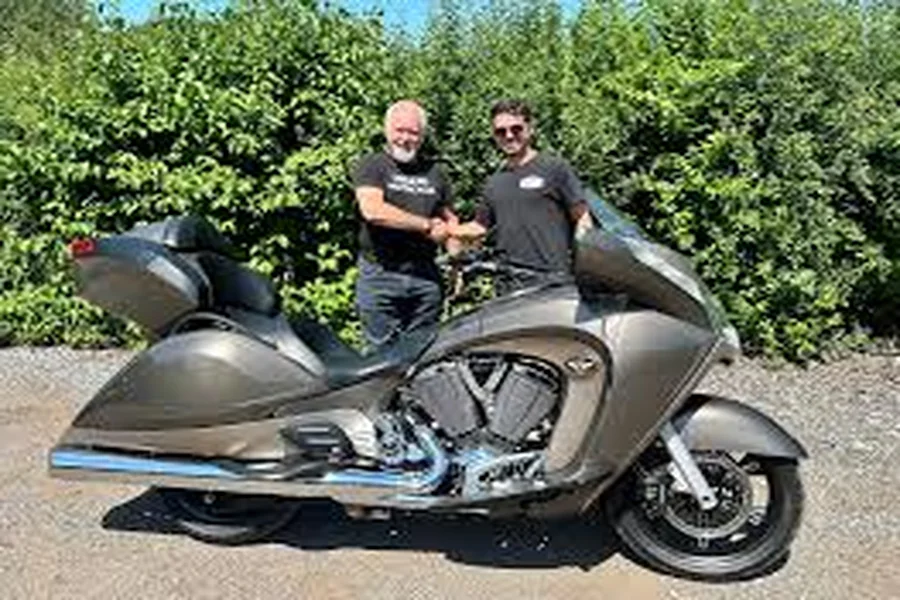
Motorcycles have long represented freedom, independence, and rebellion within American culture. From cross-country highway travel to racing culture and recreational riding communities, motorcycles occupy a unique place in the national identity that few other vehicles match.
But according to a recent study conducted by Texas Law Dog, the same culture that celebrates freedom and risk-taking may also contribute to persistently high motorcycle fatality rates across the United States.
The research examined motorcycle safety laws, rider behavior, fatality trends, helmet usage, and crash risk factors nationwide. The findings suggest motorcycle safety in America is shaped not only by traffic laws and infrastructure, but also by deeply rooted cultural attitudes surrounding riding itself.
Motorcycles remain significantly more dangerous than passenger vehicles during crashes.
Unlike drivers inside cars or trucks, riders lack airbags, seat belts, reinforced cabins, and other forms of structural protection. Even relatively low-speed collisions can produce catastrophic injuries for riders. Researchers found motorcyclists continue accounting for a disproportionate share of roadway deaths compared to their total presence on American roads.
Yet many riders are drawn to motorcycles precisely because of the sense of exposure and freedom they provide.
The study noted that motorcycle culture often emphasizes independence, open-road travel, and personal autonomy — values that sometimes conflict with safety-focused regulations such as mandatory helmet laws or stricter licensing requirements.
Helmet laws remain one of the clearest examples.
States with universal helmet mandates consistently record lower fatality rates and fewer traumatic brain injuries among riders. However, opposition to universal helmet requirements remains strong among portions of the riding community, where helmets are sometimes viewed as symbols of government overreach rather than safety equipment.
Researchers found helmet usage rates closely track state law strength.
In states where helmets are legally required for all riders, compliance rates remain substantially higher than in states allowing exemptions for adults. The findings suggest legislation itself strongly shapes rider behavior regardless of personal risk preferences.
The study also explored how recreational riding patterns affect crash exposure.
Unlike passenger vehicles used primarily for commuting or errands, many motorcycles are ridden recreationally during weekends, vacations, rallies, or scenic highway trips. These riding periods often coincide with higher traffic speeds, group riding dynamics, alcohol consumption, and unfamiliar roads.
Alcohol impairment remains a major factor in fatal motorcycle crashes nationwide.
Researchers found impaired riding continues contributing heavily to severe and fatal motorcycle collisions. Because motorcycles require constant balance, rapid reaction time, and precision control, even moderate impairment can significantly reduce rider stability and judgment.
Speeding also emerged as a major risk factor.
Modern motorcycles are capable of rapid acceleration and high top speeds, and some riders engage in aggressive riding behavior on highways or rural roads. Researchers found excessive speed sharply increases both crash likelihood and injury severity during motorcycle impacts.
At the same time, riders frequently face dangers created by other motorists.
Passenger vehicle drivers often fail to detect motorcycles in traffic due to their smaller visual profiles. Many multi-vehicle motorcycle crashes occur when drivers turn in front of riders or merge into motorcycles occupying blind spots.
Distracted driving may be intensifying these risks nationwide.
Smartphone use and digital in-car systems continue reducing driver attention spans, making it easier for motorists to overlook smaller vehicles such as motorcycles.
The study also found that rider demographics are evolving.
Middle-aged riders increasingly account for a large percentage of fatalities, particularly among owners of heavier touring motorcycles. Many return to riding after years away or purchase motorcycles later in life without extensive recent riding experience.
Training standards remain inconsistent nationwide.
Some states require extensive motorcycle safety courses before issuing endorsements, while others impose relatively minimal requirements. Researchers found formal rider training improves hazard recognition, braking technique, cornering control, and emergency maneuvering skills.
Infrastructure issues compound many of these risks.
Potholes, debris, slick pavement, and uneven road surfaces can destabilize motorcycles far more easily than passenger vehicles. Rural highways also present additional dangers involving wildlife crossings, limited lighting, and delayed emergency response times after crashes.
The study ultimately suggests motorcycle safety cannot be separated from the broader culture surrounding riding itself.
As motorcycles continue symbolizing freedom and personal independence for millions of Americans, researchers argue that improving rider safety may depend not only on stronger laws and better infrastructure, but also on shifting cultural attitudes toward helmets, speed, impairment, and risk management within the riding community itself.
