
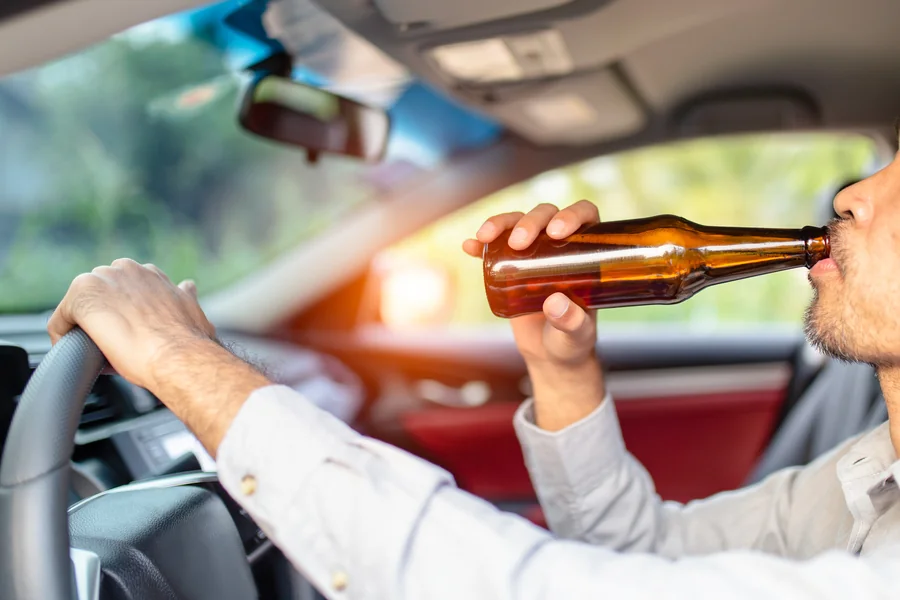
A review of federal crash data shows that alcohol impairment among drivers in fatal crashes is nearly three times higher at night than during the day, according to the National Highway Traffic Safety Administration (NHTSA). Despite that gap being well documented for years, most U.S. cities — including Houston — still haven’t adapted their infrastructure, enforcement, or lighting to match the risk.
Terry Bryant Accident & Injury Law, a Houston personal injury firm that has represented crash victims since 1985, reviewed the latest NHTSA and Governors Highway Safety Association (GHSA) datasets to break down where, when, and why nighttime roads remain so much more dangerous — and what it means for the families the firm works with every day.
About Terry Bryant Accident & Injury Law
Founded by attorney Terry Bryant in 1985, the firm has spent four decades representing Texans injured in car accidents, truck crashes, and other serious collisions. Bryant is Board Certified in Personal Injury Trial Law by the Texas Board of Legal Specialization and previously served 22 years as a municipal judge in Spring Valley Village, Texas — experience the firm says shapes how it prepares cases for negotiation and trial. Over the course of its history, the firm reports having recovered more than $1 billion for injured clients, with a practice that includes drunk driving collisions, pedestrian accidents, and other nighttime crash cases that mirror the patterns in this data.
That case history is part of why the firm decided to dig into the numbers directly, rather than rely on general assumptions about “dangerous driving hours.”
Key Findings
- Alcohol impairment among drivers in fatal crashes is nearly 3x higher at night than during the day.
- Between midnight and 3 a.m., two-thirds of all fatal crashes involve an alcohol-impaired driver.
- Fatal pedestrian crashes at night rose 84% between 2010 and 2023, compared to a 28% increase during daytime hours.
- 56% of people killed at night in 2024 were unrestrained, versus 41% during the day.
- Drivers involved in fatal nighttime crashes were speeding more often — 21% of the time, versus 16% during the day.
- U.S. traffic deaths fell to 39,254 in 2024, down from 40,901 in 2023, yet the nighttime risk gap hasn’t closed at anywhere near the same pace.
The Numbers Behind the Nighttime Risk Gap
Nighttime driving isn’t just “a little” riskier — the data suggests it behaves almost like a different environment altogether. NHTSA’s own risk-factor analysis puts it plainly: alcohol impairment among drivers involved in fatal crashes is nearly three times higher at night than during the day. Zoom into the early morning hours and it gets starker still — NHTSA time-of-day research found that two-thirds of all fatal crashes between midnight and 3 a.m. involve an alcohol-impaired driver, more than double the 24-hour average.
For the attorneys at Terry Bryant Accident & Injury Law, that statistic lines up closely with what the firm sees in its own casework: a disproportionate share of the drunk driving accident claims it handles trace back to those same overnight hours, when impairment rates are at their highest.
Pedestrians Are Bearing the Brunt of It
If there’s one group the data flags as most exposed, it’s people on foot. According to GHSA’s analysis of state-reported crash data, fatal pedestrian crashes at night rose 84% between 2010 and 2023 — three times the growth rate of daytime pedestrian deaths over the same period. Nearly two-thirds of pedestrian deaths in 2023 happened in locations with no sidewalk at all, meaning walkers and drivers were often sharing the same strip of pavement after dark with zero separation and minimal lighting.
Nighttime Crashes Are Also Faster and Less Survivable
Speed and seatbelt use compound the darkness problem. NHTSA data shows drivers involved in fatal nighttime crashes were speeding 21% of the time, compared to 16% during the day. And when a nighttime crash does happen, the outcome is measurably worse: 56% of people killed in nighttime crashes in 2024 were unrestrained, compared to 41% of those killed during the day.
Why the Infrastructure Hasn’t Caught Up
None of this is new information to city planners. So why hasn’t infrastructure kept pace with a risk profile that’s been visible in the data for over a decade?
Street lighting upgrades are expensive and slow to roll out citywide. Even where studies — including a 2022 analysis in the Journal of Safety Research — show that better LED lighting can cut nighttime crashes by double digits in test corridors, full-scale rollouts often stall behind competing budget priorities.
Lane markings and signage degrade faster than city repaving schedules account for. Reflective paint that looks fine to inspectors in daylight can be nearly invisible in headlights and rain, and most cities resurface on multi-year cycles that leave gaps.
Signal timing built for daytime congestion doesn’t always translate to low-traffic nighttime conditions, contributing to red-light running and abrupt braking among drivers who misjudge intervals they’re less familiar with after dark.
Attorneys at the firm say this pattern lines up with what they see in their own Houston car accident lawyer casework — lighting and infrastructure upgrades consistently losing out to other budget priorities, even as the data makes the risk clear.
What This Means for Drivers Right Now
While cities work through funding and planning cycles, the data points to a few concrete things drivers can control tonight:
- Slow down after dark, particularly on roads without sidewalks or shoulder lighting.
- Check headlight alignment and cleanliness — dimmed or misaimed headlights shrink visible range more than most drivers assume.
- Assume pedestrians and cyclists may be present near intersections, even where visibility seems clear.
- Buckle up, every time — the restraint gap between day and night fatalities is one of the starkest numbers in this dataset.
- Arrange a ride in advance if alcohol will be involved, especially between midnight and 3 a.m., when NHTSA’s data shows risk peaks sharply.
If You’re Already Dealing With a Nighttime Crash
For families already navigating the aftermath of a nighttime collision, Terry Bryant Accident & Injury Law notes that these cases often carry extra complexity — impairment evidence, poor lighting conditions, and disputed fault all tend to surface more often in overnight crashes than in daytime ones. The firm’s four decades of Houston-based casework are built around exactly that kind of case.
Methodology and Sources
This analysis draws on publicly available data from NHTSA’s Fatality Analysis Reporting System (FARS), NHTSA’s “Understanding the Problem” research on alcohol-impaired driving, NHTSA’s time-of-day crash statistics, and GHSA’s 2024 pedestrian fatality report. All figures reflect the most recently published federal and state-reported data at the time of writing.
The gap between what the data shows and what U.S. streets are built for hasn’t closed — and until it does, nighttime will keep carrying a disproportionate share of the country’s traffic deaths.
