
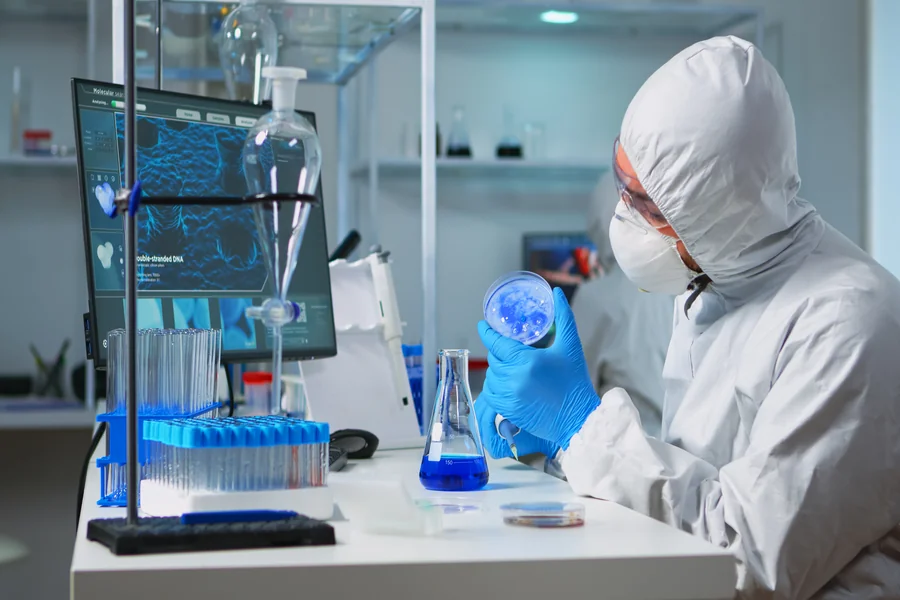
Bovine Serum Albumin (BSA) is a common product in biomedical and biological studies. However, choosing the right BSA can sometimes be confusing. Different grades, purity levels, and quality standards can affect your results. Due to this, an incorrect choice of the product can result in irregular experiments or unreliable data.
That’s why it is important to understand what BSA powder is and how it works. When you are aware of its composition, production process, and quality standards, you can select the correct product to use in your research with more confidence.
Whether you work in cell culture, molecular biology, or diagnostic testing, a good understanding of BSA can help improve the accuracy and consistency of your work.
Its composition, production, and scientific uses are discussed in an easy and practical manner in the following sections. Let’s dive in.
1. Origin and Composition of Bovine Serum Albumin Powder
Bovine Serum Albumin powder is a purified protein taken from the blood serum of healthy cattle. Albumin is the most common protein found in bovine blood plasma.
It assists in transporting essential substances such as hormones, fatty acids, vitamins, and other molecules within the body. Because it is stable and binds well with many molecules, it is widely used in scientific research.
This protein has a molecular weight of about 66.5 kDa and is made of a single chain of amino acids. It is held together by strong disulfide bonds. This structure makes it very stable, even under different laboratory conditions.
Depending on its use, BSA is available in various grades. Scientists select grades according to purity, levels of endotoxins, fatty acids, and other quality considerations. These variations aid in the appropriate BSA for the appropriate experiment.
BSA is also highly soluble in water and can conjugate to a wide range of proteins and molecules. Due to these characteristics, it finds applications in various kinds of biological and laboratory research.
2. Manufacturing Process and Quality Control Standards
 BSA powder is produced from bovine serum that is well collected. Albumin is isolated through special purification procedures from this serum. These techniques eliminate unwanted proteins, fats, enzymes, and other impurities without damaging the albumin protein.
Different purification steps are used in the process, such as precipitation, filtration, and chromatography. Collectively, these measures enable the generation of a highly concentrated albumin, which can be used in research.
Quality control is a significant aspect of the whole process. Each batch is also tested to ensure that it is pure, consistent, and properly identified. Purity is checked by such techniques as SDS-PAGE and HPLC. Mass spectrometry or peptide mapping is used to confirm the protein’s identity.
Another significant test is the endotoxin test. Even such minute traces of endotoxins may influence cells and alter the outcomes of experiments. For this reason, low-endotoxin BSA is used in sensitive experiments.
Other conditions, such as moisture content, protein concentration, solubility, and microbial quality, are also verified before discharge. These measures are used to make sure that research is reliable and consistent.
3. Functional Role of Bovine Serum Albumin in Biological Research
BSA has many important functions in laboratory research. It is not a single-purpose reagent. Instead, it plays multiple roles that help improve the quality and reliability of different biological experiments.
One of its most important roles is protein stabilization. Many enzymes, antibodies, and recombinant proteins remain more stable when BSA is added to the solution. It helps prevent proteins from sticking together or binding to laboratory surfaces, which can otherwise reduce their activity or accuracy in experiments.
BSA also works as a carrier protein. It has the ability to bind with different types of molecules, including lipids, hormones, vitamins, and metal ions. Because of this property, it helps researchers transport, protect, or deliver these molecules during different experimental procedures in a controlled way.
Another very important function of BSA is blocking nonspecific binding. In many immunological and biochemical assays, proteins can sometimes stick to lab plates, tubes, or membranes without a specific reason. This creates unwanted background signals and affects the clarity of results. BSA helps reduce these unwanted interactions, which improves the sensitivity of assays and gives clearer, more reliable outcomes.
In addition, BSA also supports the overall environment for cell growth. It helps maintain osmotic balance in cell culture systems and creates more stable conditions for cells to survive and grow properly. Because of all these combined functions, BSA is considered one of the most useful and widely used proteins in life science research and is applied in many different types of laboratory studies.
4. Applications of Bovine Serum Albumin Powder Across Scientific Disciplines
Cell Culture and Tissue Engineering
BSA is widely incorporated into cell culture media because it provides a stable environment for growing cells. It binds nutrients, stabilizes growth factors, and protects sensitive biomolecules from degradation. These functions help maintain healthy cell cultures during routine laboratory experiments.
Researchers working in stem cell biology and tissue engineering also use BSA to support cell viability and improve media performance. Furthermore, low-endotoxin formulations are especially valuable for experiments involving highly sensitive cell types, where even minor contaminants can influence cellular responses.
Molecular Biology and Protein Research
In molecular biology laboratories, BSA supports a wide range of experimental techniques. It stabilizes enzymes used in DNA amplification, restriction digestion, and other molecular workflows. This stabilization helps maintain enzyme activity throughout experimental procedures.
BSA is also frequently used in protein purification, biochemical assays, and protein quantification studies. Because of its consistent properties, researchers often use it as a reference standard during protein concentration measurements.
Moreover, BSA minimizes protein loss caused by adsorption to laboratory containers and reaction vessels. This improves sample recovery and enhances the reliability of analytical experiments involving low protein concentrations.
Immunological and Diagnostic Assays
Immunological research relies heavily on BSA because of its excellent blocking capabilities. During enzyme-linked immunosorbent assays (ELISA), Western blotting, immunohistochemistry, and immunofluorescence, BSA blocks nonspecific binding sites and reduces background interference.
This leads to stronger signal specificity and more accurate detection of target proteins or antibodies. As a result, researchers obtain cleaner experimental data with improved reproducibility.
BSA also contributes to the formulation of diagnostic reagents by stabilizing sensitive proteins and antibodies during storage and transportation. Its stability supports consistent assay performance across multiple testing conditions.
Conclusion
Bovine Serum Albumin powder remains an essential reagent across modern life science research because of its stability, versatility, and broad range of laboratory applications. From supporting cell culture and molecular biology workflows to improving immunological and diagnostic assays, BSA continues to play a critical role in producing dependable scientific results.
At the same time, understanding its composition, manufacturing process, and quality standards allows you to select the most appropriate product for your research needs.
By choosing high-quality BSA that meets rigorous purity and low-endotoxin requirements, you can strengthen experimental consistency, improve reproducibility, and generate more reliable biological data across a wide range of scientific disciplines.
