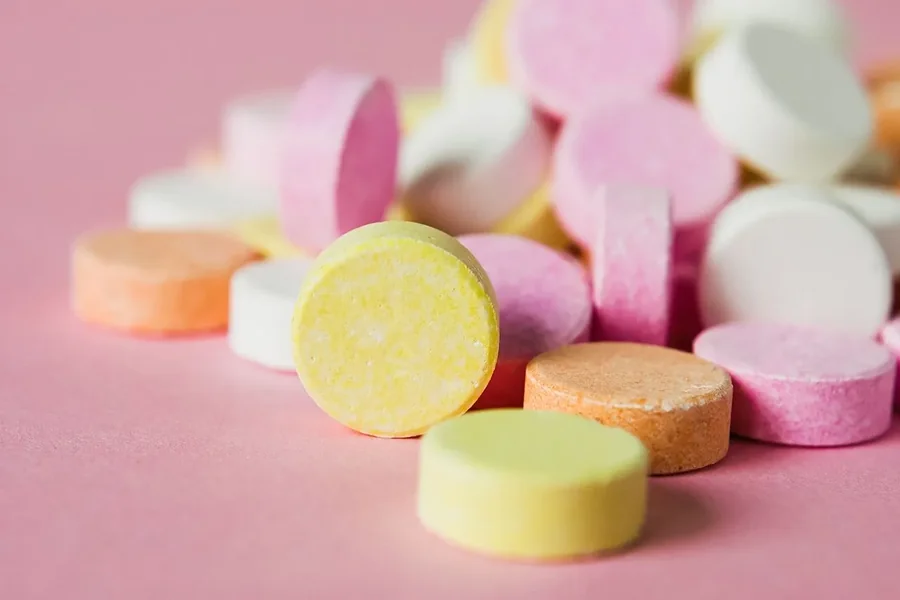
Chewable vitamins, like gummies and soft chews, have made supplements more enjoyable, but their “candy-like” appeal requires strict quality control. Manufacturers ensure safety, potency, and consistency by inspecting raw ingredients and monitoring every production stage to deliver accurate, contaminant-free products that remain stable until expiration.
The First Line of Defense: Raw Material Inspection
Great products cannot be made from poor ingredients. The foundation of any robust quality control system lies in the qualification of vendors and the inspection of raw materials. Before a single grain of sugar or a milligram of Vitamin C enters the production line, it must undergo scrutiny.
Manufacturers typically require a Certificate of Analysis (CoA) from their suppliers for every ingredient. However, relying solely on a supplier’s word is insufficient for high-quality production. Upon arrival, raw materials are quarantined until they are verified by the manufacturer’s in-house laboratory or a third-party facility.
Identity and Potency Testing
The first step is identity testing. Using advanced spectroscopic techniques, chemists verify that the white powder in the drum is indeed what the label claims it is. This prevents dangerous mix-ups and ensures supply chain integrity. Following identity verification, potency testing ensures the ingredient is at the correct concentration. If an ingredient has degraded during transit due to heat or moisture, it is rejected immediately.
Screening for Contaminants
Safety is paramount. Raw materials are rigorously screened for heavy metals (such as lead, mercury, and arsenic), pesticides, and microbiological contaminants like Salmonella or E. coli. This stage is critical because once ingredients are mixed into a batch, it becomes much harder to identify the source of contamination. By catching issues at the door, manufacturers protect the entire production line.
Manufacturing Process Controls
Once raw materials are cleared, they move into production. This is where the science of formulation meets the art of manufacturing. Consistency is the goal here. A customer expects the first chew in the bottle to taste, look, and work exactly the same as the last one.
Precise Weighing and Mixing
In chewable nutrition, homogeneity is vital. If a mixture isn’t blended perfectly, one gummy might contain a double dose of a vitamin while the next contains none. Production teams utilize calibrated scales and automated weighing systems to ensure precise measurements. Mixing times and speeds are validated to guarantee an even distribution of active ingredients throughout the carrier matrix (pectin, gelatin, etc.).
Environmental Monitoring
Chewables are highly sensitive to their environment. Factors like temperature and humidity can drastically alter the texture and stability of the final product. This is particularly true in gummy supplement manufacturing, where excess moisture can lead to sticky products or microbial growth, while low humidity can cause them to dry out and harden. State-of-the-art facilities employ strict environmental controls, monitoring room conditions 24/7 to keep them within tight specifications.
In-Process Checks
Quality control inspectors don’t just wait for the finished product. They are present on the floor during production. They perform “in-process” checks, measuring weight, thickness, hardness, and disintegration time at regular intervals. If a machine drifts even slightly out of calibration, these checks catch the error immediately, allowing operators to adjust before a full batch is compromised.
The Final Verdict: Testing and Analysis
After the manufacturing process is complete, the product is not yet ready for the shelf. It enters a “finished good” quarantine status, pending final release testing. This is the comprehensive exam the product must pass to graduate to the consumer market.
Verifying Label Claims
The most critical test is the assay, or potency test. Laboratory technicians test a statistically significant sample of the batch to ensure the active ingredients meet the amounts stated on the supplement facts panel. Since some vitamins can degrade when exposed to heat during processing, manufacturers often include “overages” (a slight excess of the active ingredient) to ensure 100% label claim is met at the end of the product’s shelf life.
Microbial and Heavy Metal Testing
Just as raw materials were tested, the finished product undergoes another round of safety screenings. This confirms that no contamination was introduced during the mixing, molding, or packaging phases.
Dissolution and Stability
For a supplement to be effective, it must break down in the body so nutrients can be absorbed. Dissolution testing mimics the human digestive system to verify that the chewable breaks down within a specified timeframe. Additionally, stability testing involves placing samples in chambers with controlled temperature and humidity to observe how the product holds up over time. This data is what allows manufacturers to confidently print an expiration date on the bottle.
Navigating Regulatory Compliance
The supplement industry is regulated, and adhering to strict guidelines is non-negotiable for reputable manufacturers. In the United States, the Food and Drug Administration (FDA) enforces Current Good Manufacturing Practices (cGMP) under 21 CFR Part 111.
cGMP Standards
Compliance with cGMP affects every aspect of the facility. It dictates requirements for:
- Personnel: Staff must be properly trained and wear appropriate hygiene gear.
- Grounds and Equipment: Machinery must be designed for easy cleaning to prevent cross-contamination.
- Record Keeping: Every step of the process must be documented. If it wasn’t written down, in the eyes of the FDA, it didn’t happen.
Third-Party Certifications
Many top-tier producers go beyond the minimum federal requirements by seeking third-party certifications from organizations like NSF International, USP (United States Pharmacopeia), or SQF (Safe Quality Food). These bodies conduct rigorous, unannounced audits of the facility and test products independently. Displaying these seals on a product helps manufacturers signal their dedication to quality to consumers and retailers.
Conclusion
Quality control in chewable nutrition is complex, expensive, and time-consuming. However, it is the only barrier standing between a safe, effective health product and a potential hazard. For consumers, the quality of a chewable vitamin isn’t just about good flavor or texture; it is about safety and efficacy.
