

In legging manufacturing, lead time plays a decisive role in how smoothly a collection moves from concept to market. It influences everything from fabric sourcing and sampling to production planning and delivery timelines. When one stage falls behind, the impact can quickly spread across the entire supply chain. This is why managing lead times in legging manufacturing has become a key priority for brands aiming to stay responsive, control costs, and meet market expectations.
Managing Lead Times in Legging Manufacturing
Typical Production Timelines for Leggings
Production timelines for leggings can vary significantly depending on a factory’s capacity, material readiness, and the technical complexity of the product. For an order of around 3,000 pieces, the process is typically divided into two main phases: Development and Bulk Production.
For example, manufacturing 3000 pcs of leggings, The development phase usually takes around 35-40 days. It begins with quotation and input review, followed by material development if custom or performance fabrics are required. During this stage, factories typically produce one to two prototype rounds to fine-tune fit, construction, and detailing before moving forward.
Once the samples are approved, the order enters the pre-production stage, which takes approximately 26 days. This phase focuses on order confirmation, fabric color approval through lab dips, and the final PP (pre-production) sample. These steps ensure that colors, measurements, and technical specifications are fully aligned before bulk cutting starts.
The final stage is bulk production and shipment, which generally takes about 90 days in total. This includes material lead time for fabrics and trims, sewing and assembly, final quality inspection, and shipment arrangement.
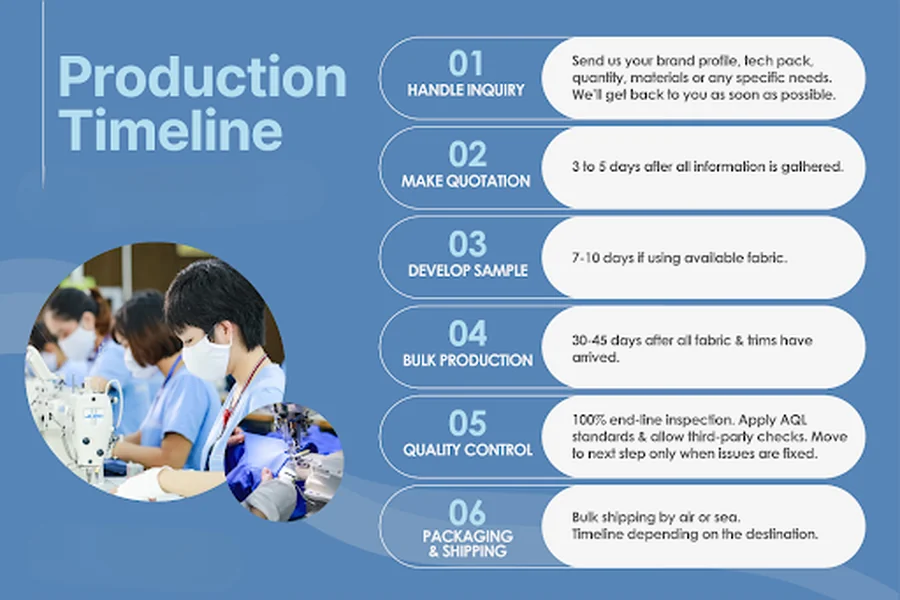
Reference production timeline of a bulk clothing manufacturer
Common Causes of Production Delays
Production delays in legging manufacturing often occur when one or more stages in the workflow fail to stay aligned. While timelines may look clear on paper, real-world execution depends heavily on preparation, communication, and technical readiness.
One of the most common causes is incomplete or unclear input at the quotation stage. Missing details in tech packs, fabric specifications, or size grading can lead to repeated revisions, pushing back sampling and material sourcing before production even begins.
Fabric development and approval is another frequent bottleneck. This step is often more complex than in factories acting primarily as a hoodie manufacturer, as legging fabrics must pass strict stretch, recovery, and durability tests before bulk approval. Custom performance fabrics, special finishes, or new colorways require additional testing and lab dips. When fabric quality or color results do not meet expectations, re-development becomes necessary, extending lead times significantly.
Delays also occur during sampling and fit adjustments. Multiple rounds of prototype revisions, often caused by late design changes or unresolved fit issues can slow the transition from development to bulk production. Each revision affects pattern correction, costing, and scheduling.
During bulk production, material lead time remains a critical risk factor. Fabrics or trims arriving late, especially for large orders, can disrupt sewing schedules and create production gaps, even when factory capacity is available.
Finally, production complexity and quality control requirements can extend timelines. Technical stitching, zippers, or detailed constructions require slower sewing speeds and additional inspections. While this ensures product quality, it can lengthen production time if not planned accurately from the start.
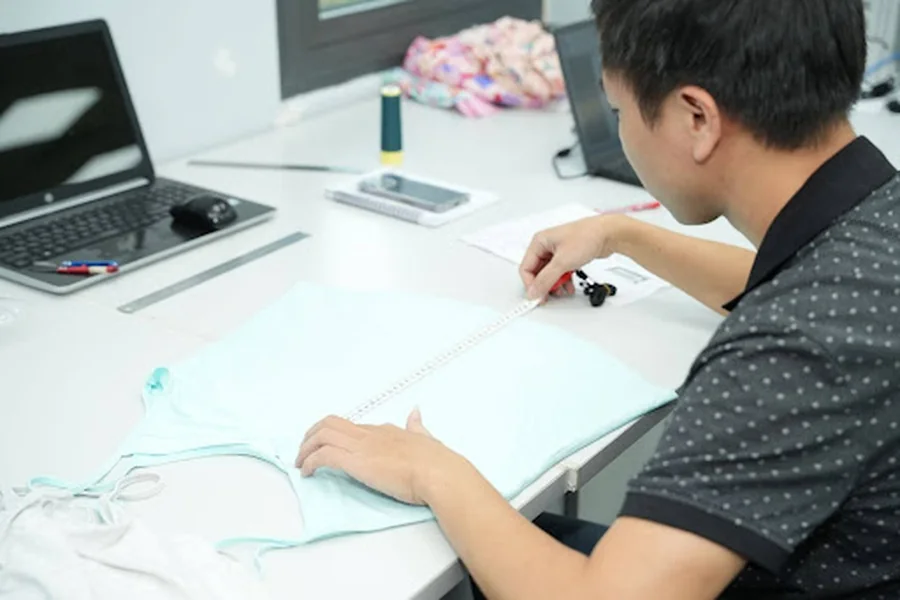
Inaccurate quality control can lead to higher defect rates, product rejections, production delays, increased costs, and potential damage to brand reputation
How a Reliable Legging Manufacturer Improves Lead Time Planning
By combining foresight, strong organization, strict sample checks, and skilled craftsmanship, a reliable legging manufacturer helps brands deliver on time while maintaining high quality.
Experienced teams know how to anticipate common problems like fit issues, fabric delays, or trim shortages and can plan ahead to prevent unexpected stops. Clear and well-organized order management is essential. In a professional factory, the team coordinates every stage from sourcing materials to sampling and bulk production, making sure nothing is overlooked and communication is smooth.
Careful approval of pre-production samples is another key factor. By checking fit, construction, and color thoroughly before bulk production, the factory avoids mistakes that could lead to costly rework and delays.
Good manufacturers also make sure there is no idle time. If they are waiting for fabrics or trims, they use that time to prepare other materials, pre-cut components, or check equipment, keeping the production process moving efficiently.
Finally, skilled workers help reduce mistakes. Experienced sewing teams know how to handle complex designs with zippers, flatlock stitching, or multiple straps so that the work is done right the first time, avoiding repeated adjustments.
In conclusion, managing lead times is crucial in legging production, as delays at any stage can affect the entire process. They often happen when design details are unclear, materials arrive late, or samples need multiple revisions. Experienced manufacturers anticipate these issues, plan ahead, and keep production running smoothly. All of these measures help products reach the market on time while maintaining high quality.
