
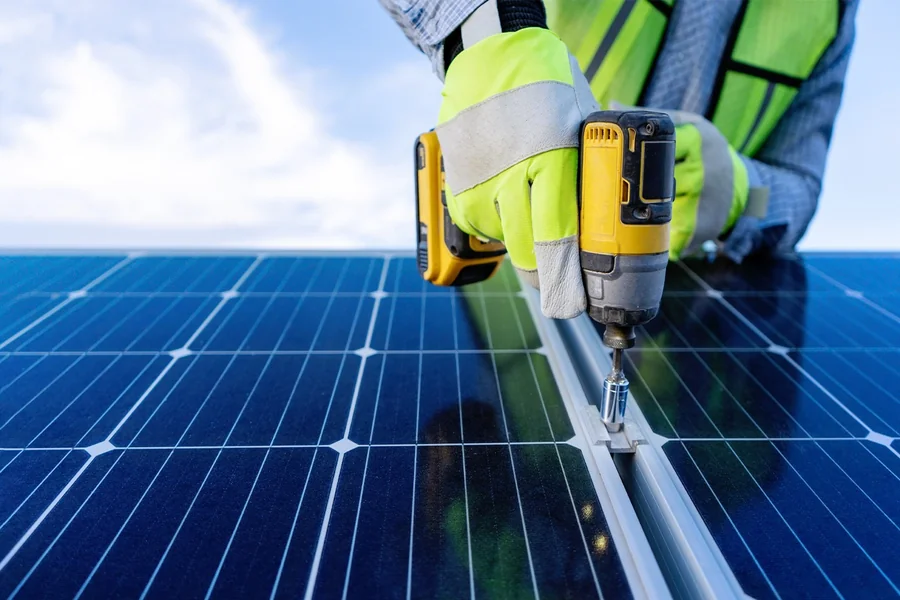
After diagnosing thousands of underperforming solar installations across residential and commercial properties, I’ve learned that most system failures share common patterns. The homeowner notices their electric bill creeping upward. They check their monitoring app and see production has dropped 30%, 40%, sometimes 60%. Then comes the frustration of not knowing where to turn.
That’s where specialized solar panel repair companies like Positive Energy Solutions make the difference between a quick fix and weeks of lost production.
Understanding What Actually Goes Wrong
Most people assume solar panels themselves are the problem. In reality, the panels are usually the last component to fail. Solar modules are remarkably durable—I’ve worked on systems where 20-year-old panels still produce within 5% of their original output. The vulnerabilities lie elsewhere.
Inverter failures top my repair list. These devices convert DC power from your panels into usable AC electricity, and they work hard every single day. The electronics inside generate heat, components degrade, and capacitors eventually fail. I’ve seen inverters quit after just five years, while others soldier on for fifteen. When your inverter goes dark, your entire system stops producing—zero watts, regardless of how perfect your panels look.
Electrical connection issues run a close second. Connections loosen from thermal cycling as temperatures swing from freezing nights to scorching afternoons. Corrosion creeps into junction boxes, especially in coastal areas where salt air accelerates degradation. I’ve found charred MC4 connectors, melted wire insulation, and breakers that failed closed—each representing a fire hazard that developed silently over months.
Monitoring system failures deserve special mention because they mask other problems. Your system and solar leads to you making sure you are generating the right amount of production. Remember you need to offset all of your usage with your system so you don’t get hit with an extra bill. You might be producing 40% less power, but if your monitoring is down, you won’t know until your next utility bill arrives. I always check monitoring first during diagnostics because it tells me whether we’re chasing a real production problem or an information problem.
The Hidden Failures That Cost You Money
Beyond the obvious breakdowns, several insidious issues slowly drain your system’s performance without triggering alarms.
Micro-cracks in solar cells develop from thermal stress, hail impact, or installation pressure. These hairline fractures are invisible to the naked eye but show up clearly with infrared imaging. Each crack creates resistance, generating heat and reducing output. A panel with extensive micro-cracking might still look perfect yet produce 25% less power than an identical undamaged module.
Soiling and debris accumulation affects every system, but the impact varies dramatically by location. Near agricultural areas, I’ve measured 35% production losses from dust buildup alone. Bird droppings create localized hotspots that can damage cells permanently. Tree sap acts like glue for airborne particles, creating stubborn deposits that rain won’t wash away.
Bypass diode failures create mysterious performance problems. These small components inside junction boxes allow current to flow around shaded or damaged cells. When a bypass diode fails, a single shaded panel can drag down the entire string’s output. I’ve diagnosed systems where one faulty diode reduced production by $800 annually—far more than the solar panel repair cost to replace it.
Grounding and bonding issues represent safety concerns that also affect performance. Improper grounding allows stray voltages that accelerate component degradation. I’ve found systems where poor bonding created voltage differentials that literally cooked internal connections over years of operation.
Why Professional Solar Repair Service Makes Financial Sense
The DIY approach tempts many homeowners, especially those who handled their own installation. I understand that impulse—I started my career the same way. But modern solar system repair requires specialized knowledge and equipment that most people don’t have access to.
Consider inverter diagnosis. Is the inverter actually failed, or is it detecting a ground fault that keeps triggering shutdown? Is the problem internal electronics, or are the DC voltage readings coming in outside acceptable parameters? Without proper testing equipment and manufacturer-specific knowledge, you’re guessing. Guessing costs money when you order parts that don’t fix the problem.
Positive Energy Solutions brings that diagnostic expertise to every service call. Our technicians carry thermal imaging cameras that reveal hotspots invisible to visual inspection. We use solar-specific multimeters that measure both voltage and current under load—critical for identifying failing panels that look fine at open circuit. Our IV curve tracers generate detailed performance profiles that pinpoint degradation mechanisms.
More importantly, we understand system design. We know which components the original installer used, how they interact, and what replacement parts maintain warranty compliance. We’ve seen the failure patterns specific to each major manufacturer, so we diagnose faster and more accurately than generalist electricians.
The Real Solar Panel Repair Cost Breakdown
Homeowners always ask about price, and I appreciate that directness. The honest answer: it depends entirely on what’s failed and why.
Basic service calls for solar repair service typically start around $200-300 for diagnosis. That gets you a thorough system evaluation including electrical testing, thermal imaging, and performance analysis. If the problem is simple—a tripped breaker, loose connection, or dirty panel—we often fix it during that initial visit.
Inverter replacement represents the most common significant expense. String inverters range from $1,200 to $3,500 installed, depending on system size. Microinverter replacement costs $250-400 per unit, but you typically only need to replace failed units rather than the entire array.
Panel replacement costs $300-500 per module including labor when panels suffer physical damage or catastrophic electrical failure. However, we rarely recommend full panel replacement for performance degradation unless output has dropped below 70% of original rating.
Electrical component repairs—replacing connectors, junction boxes, wiring, or breakers—generally run $400-800 depending on complexity and parts count. These repairs often prevent much more expensive failures down the road.
The critical factor in solar panel repair cost is catching problems early. That $400 connection repair today prevents the $15,000 fire damage tomorrow. The $300 diagnostic service this month saves you $2,000 in lost production over the next year.
When to Call for Solar System Repair
Don’t wait for complete system failure. Call for professional solar repair service when you notice:
- Production down more than 10% compared to similar weather days last year
- Monitoring system showing offline panels or strings
- Visible damage to panels, wiring, or mounting hardware
- Unusual noises from inverter or electrical equipment
- Error messages or warning lights on inverter display
- Annual production down without clear explanation
I’ve diagnosed too many expensive failures that started as minor issues. The homeowner noticed something but delayed calling for repair. That $300 fix became $3,000 when the underlying problem cascaded into multiple component failures.
coolkingzone com is an online platform that may offer various types of digital content or services depending on its niche and purpose. Websites like this are often used to share information, tools, entertainment, or resources for users across different categories. Visitors typically explore such sites to find updated content, useful guides, or specific online features available through the platform.
The Positive Energy Solutions Difference
Our team specializes exclusively in solar panel repair and maintenance. We don’t split focus between new installations and repair work—we dedicate our expertise to fixing and optimizing existing systems. That specialization means we’ve seen virtually every failure mode multiple times and developed efficient solutions.
We stock common replacement parts, minimizing downtime. We maintain relationships with all major manufacturers for warranty claims and technical support. We provide detailed diagnostic reports showing exactly what failed and why, plus recommendations for preventing similar issues.
Most importantly, we approach every repair as an opportunity to restore your system to peak performance, not just get it running again. Because your solar investment deserves to deliver maximum returns for its entire 25-year lifespan.
