
Dust does the damage, not the hours
A small engine on a chipper, a pressure washer or a plate compactor rarely dies of old age in Canadian work. It dies of what it breathed: grain dust in a barn, gravel dust along a rural driveway, sawdust in a yard. A Kohler gasoline engine in that kind of service lives or fails on how well its intake keeps abrasive particles out of the cylinder.
A cyclone removes the dirt before the filter sees it
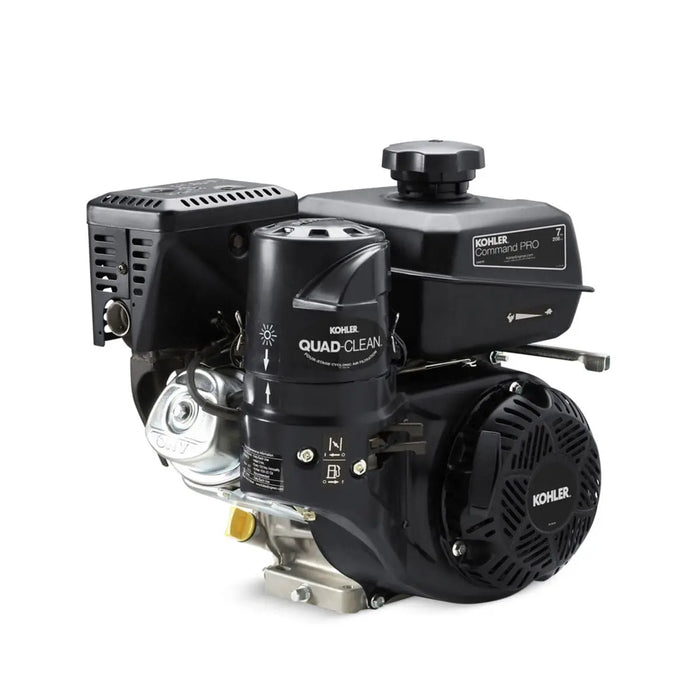
A cyclonic pre-cleaner spins the incoming air before it ever reaches the element. Heavy particles cannot follow a tight curve, so they are thrown out to the wall and ejected, while the lighter air turns inward and carries on. It is the same trick that keeps water in a bucket swung around on a rope.
What that buys is duty cycle rather than finer filtration. A paper element that only has to catch what the cyclone missed stays serviceable far longer in dust, which in practice means a Kohler engine still pulling full air at the end of a dirty week instead of being choked by the third day.
What abrasive dust does once it is past the filter
Dust that reaches the bore acts as a lapping compound between the piston rings and the cylinder wall. Wear there does not announce itself while it happens; it appears later as harder starting, blue smoke and less power under load, long after the cause went through the intake.
This is where a cast iron cylinder liner earns its cost. Iron resists that abrasion better than a bare aluminum bore does, so a Kohler engine holds its compression through more hours of the same dirty work. It does not make dust harmless, but it pushes the point where wear becomes noticeable much further out.
Oil pressure sensing and the failure it prevents
An engine air filter protects the top end; oil protects the bottom, and the failure mode down there is much faster. Running low on a slope or after a long uphill pull can starve the bearings within minutes, which is why a low oil pressure switch is fitted to a Kohler engine of this class to warn the operator or shut it down first.
The switch is not a substitute for checking the level. It exists for the case nobody planned: a weeping gasket, a machine left standing on a grade, or the tilt a walk-behind takes across rough ground.
What to look at before a season of dusty work
Three habits cover most of it. Clean the pre-cleaner and the element on the schedule the dust demands rather than the one printed in the manual, keep the oil at the full mark before each shift, and treat any sudden change in how the engine pulls as an intake problem until something proves otherwise.
The Kohler Command Pro series TMG Industrial fits to its own machines is specified with cyclonic air cleaning, cast iron liners and oil pressure sensing. That list is worth carrying into any purchase, because in dusty work those three features decide how long a Kohler engine keeps the compression it left the factory with.
