
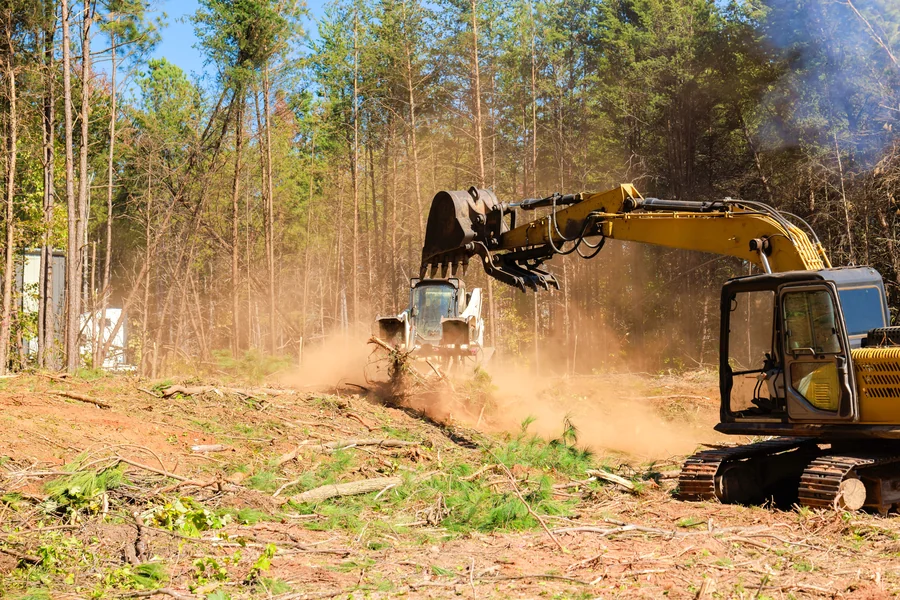
The process of professional land clearing might look an easily accessible task on the surface, but it carries significant risks and must be carefully planned and managed by the professional. From falling trees to machinery accidents, each phase of clearing of the land can be hazardous, should no measures be taken regarding the safety. No matter what kind of project is at stake, whether it is land preparation to enable construction, to engage in farming activities or even to develop a road, safety is always one of the greatest priorities. Land mulching experts are aware of this and that is why having professional services is recommended as they complete the task safely.
Close Reviews of the Site:
Professionals closely examine the land before clearing to establish potential hazards. Each location is unique and concealed hazards can pose significant safety issues whilst on-site.
Crews look at terrain, soil structure, slopes, big trees roots, rocks and structures. There is also identification of underground utility lines and overhead power lines prior to the entry of any machine to the site. This planning step will assist operators prevent accidents and decide on the land clearing means in the region that is the safest.
Safe Use of Heavy Equipment:
Clearing machinery is greatly relied upon to clear the land including bulldozers, excavators, forestry mulchers and chainsaw. These are strong machines and accelerate the work, although they also pose more danger of injury in case of improper handling. Professional operators get trained to operate equipment in the safest way, more so on unstable or uneven surfaces.
The machines are also checked frequently, to verify the functionality of the brakes, hydraulic systems and safety features. Proper maintenance decreases the possibility of an unexpected failure of equipment in the course of working. It is also necessary to maintain space between machines and people and prevent collisions and accidents.
Careful Tree Management:
One of the most hazardous activities of clearing up the land is the cutting of trees. The direction of wind, the weak trunks, or the imbalance of the weight can make trees fall when it is not expected. Such a haphazard cut may endanger workers and the surrounding property.
Professional crews apply controlled cutting methods to manage trees safely out of work areas and work equipment. Safety lines are established around the active cutting zones in order to ensure that only trained workers are nearby the site during operations. When clearing around the houses, utility lines or road extra care should be taken.
Safety Considerations on Rough Surfaces:
There are numerous land clearing jobs undertaken on steep banks, or muddy areas, or rocky terrain. Such conditions multiply the chances of machinery rollovers and injuries to workers.
The operators have to vary machine speed and movement according to the terrain. Special tools are applied in certain cases to achieve a higher level of stability and control. The conditions of accidents due to the instability of the ground are minimized with the help of proper planning.
Safety of the Environment Issues:
It is not only the workers who need safety in land clearing. Responsible operations also entail protecting the environment. Such bad clearing practices may cause erosion of soil, water pollution, and destruction of adjacent ecosystems.
Controlled clearing is a method usually used by professional crews to minimize the effect on the environment. Forestry mulching and other techniques are used to maintain soil quality and limit the unnecessary destruction of vegetation. Professionals contribute to the prevention of long-term environmental degradation by safeguarding the land at the time of clearing.
